Self-consumption optimisation
In brief
Locations with local generation and a storage system are connected so that they can be controlled to use as much of the generated energy as possible for self-consumption. The storage system is controlled to charge with the surplus generation, which can then be discharged at a later moment to cover self-consumption — in practice, this is often at night. This control strategy is often combined with Storage Control Day-ahead to optimally align the moment of charging or discharging with energy prices.
How it works
Optimising self-consumption is achieved by continuously controlling generation and storage based on data from a kWh meter on the main connection, so that as little electricity as possible is drawn from the grid. This means the storage system is controlled to achieve a situation in which the aim is 'zero on the meter'. The surplus energy that would otherwise be fed back to the grid is used to charge the storage system. The storage system then discharges at moments when there is insufficient generation available to cover consumption.

The example above shows a location with a generation and storage system, where the storage system is controlled by the Self-consumption optimisation to fully charge itself with the surplus generated energy. When generation is no longer sufficient to cover consumption, the battery will step in to supplement it with the previously stored energy.
Deferred charging
The example above shows that the battery system is full halfway through the day. For locations with a dynamic energy contract, it is often advantageous to defer this charging moment to another time when prices are at their lowest. This is possible through a combination with the Storage Control Day-ahead strategy and is referred to as Deferred charging.
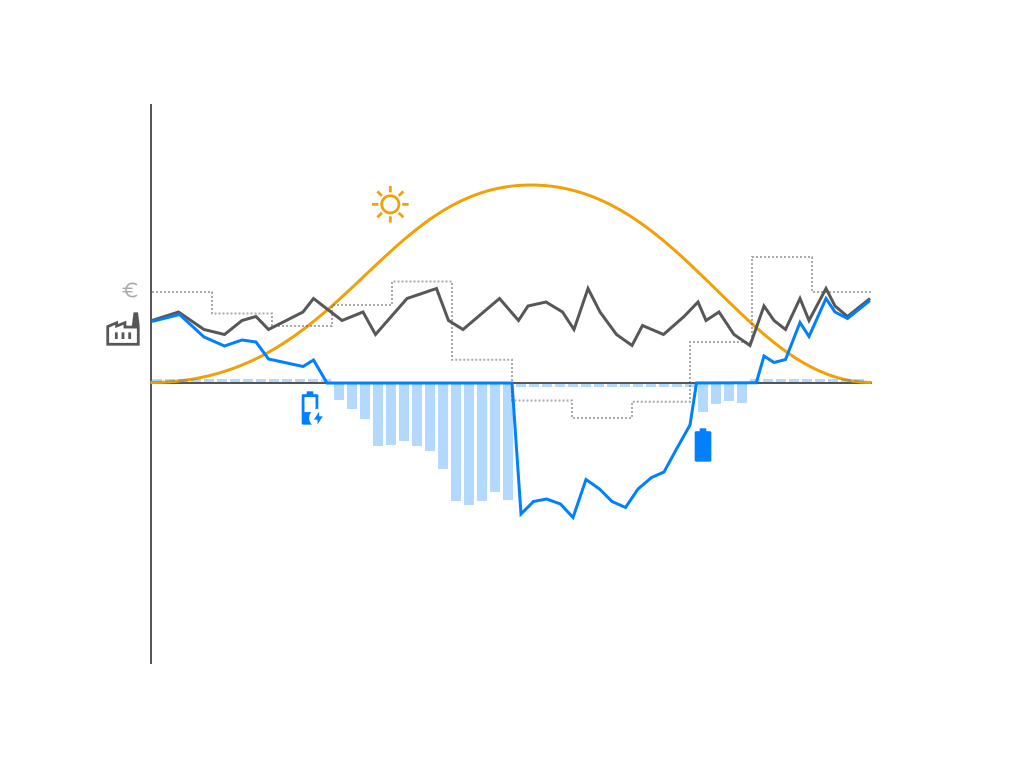
This second example shows that charging the battery is deferred until the afternoon when prices on the day-ahead market are at their lowest. This means that in the morning, energy is still being fed back to the grid when prices are still favourable. Later in the afternoon, the surplus generation is stored in the battery during the hours when this would otherwise yield the least return.
Additional information
The Self-consumption optimisation strategy makes it possible to align generation, storage, and consumption with one another by controlling the storage system in such a way as to minimise grid consumption. Below, a more detailed explanation is given of how this strategy can be applied in specific situations and which parameters influence the result.
Combining with other strategies
In practice, this strategy is often combined with other storage system-related strategies, such as Storage Peak-shaving, Storage Control Day-ahead or Storage Control by Third Party. By combining these strategies intelligently, it is possible to meet very specific requirements. When controlled via an external party, as with Storage Control by Third Party, the Self-consumption optimisation will handle control locally, minimising any delay as much as possible so that consumption and feed-in are reflected in the battery's charge and discharge power in near real-time.
Margin with Zero feed-in
In combination with the Zero feed-in strategy — for locations where no feed-in to the grid is permitted at all — it is important to take a certain margin into account. This ensures that the battery has sufficient room to begin charging and that the likelihood of feed-in is minimised as much as possible.