Storage Peak-shaving
In brief
Actively deploying the storage system to prevent exceeding the contracted capacity or the capacity of the grid connection. In combination with a meter, the power and/or current through the main connection is measured, and the battery system is discharged to prevent any potential exceedance. This control strategy is often combined with, for example, Storage Third-Party Control or Self-consumption optimisation, where a certain percentage of the State of Charge is reserved for peak-shaving.
How it works
The peak-shaving control strategy measures the energy through the main connection multiple times per second via a kWh meter, and controls the connected storage system when the limits for consumption are at risk of being exceeded. This ensures that any energy shortfall is replenished in time. The peak-shaving control strategy can be configured to target the quarter-hour average — allowing for less abrupt control — or to respond directly to the measured values. The battery system recharges as soon as capacity becomes available; when consumption decreases, space is created to charge by drawing from the grid. Or, for example, when generation from a PV system increases, additional capacity to charge also becomes available.
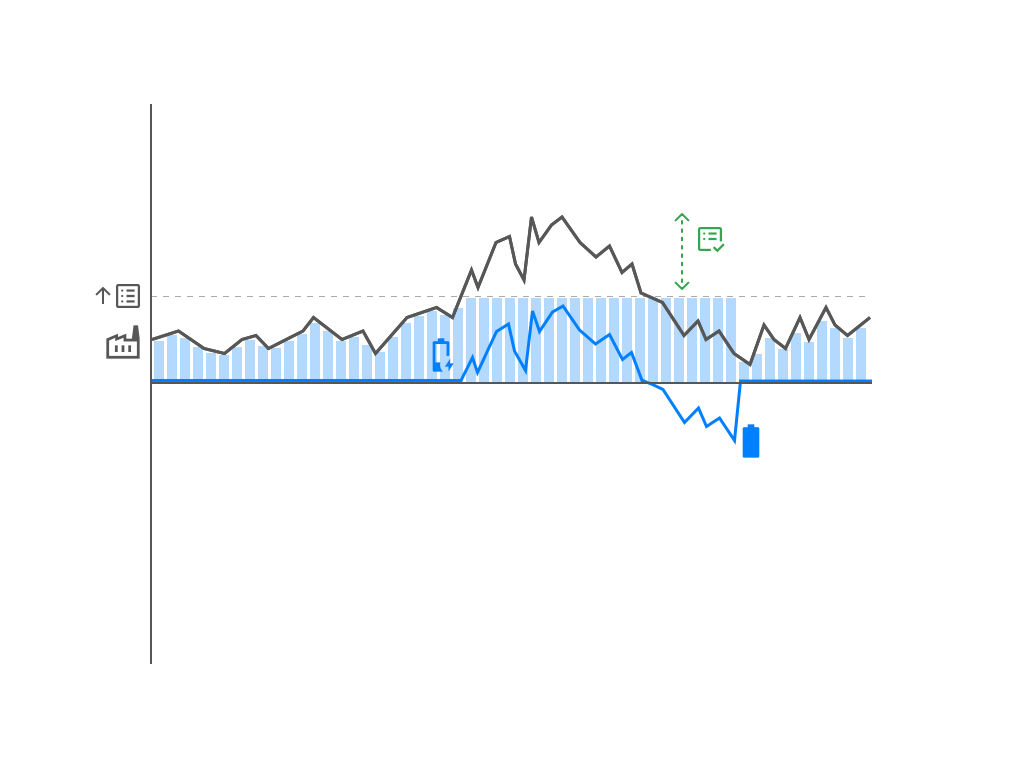
The example above shows that the battery system first discharges to absorb consumption that would otherwise cause the contracted capacity to be exceeded. As soon as capacity becomes available again due to a decrease in consumption, the battery will recharge and is thus prepared for the next peak in consumption.
Direct control or based on quarter-hour average
The peak-shaving control strategy offers the option to respond directly or to target the quarter-hour average. With direct control, the strategy will manage the battery in such a way as to avoid exceeding the configured maximum consumption power. When targeting the quarter-hour average, the strategy will initially allow this to be exceeded to a limited extent and ensure that no exceedance occurs on average over the quarter hour. In practice, this can mean, for example, that the battery does not need to intervene if the peak is of short duration.
Additional information
The Storage Peak-shaving control strategy makes it possible to actively deploy battery systems to absorb consumption that would otherwise result in an exceedance of the capacity or contracted power. Below you will find further explanation of how specific situations can be configured and what technical prerequisites apply.
Importance of accurate measurement
Especially with direct control, it is generally desirable to achieve accurate measurement in order to guarantee the reliability of this control strategy. The more accurate the meter and the more stable the data connection between all devices, the smaller the chance that the battery will intervene too late.
Combination with other control strategies
In practice, this control strategy is often combined with other strategies such as Self-consumption optimisation or Storage Third-Party Control. When capacity remains in the battery with peak-shaving alone, it can be used for another purpose to make optimal use of the storage system. When combined with another (battery) control strategy, a specific portion of the State of Charge can be configured to be reserved for the peak-shaving functionality.
Determining the correct SoC dividing point
The reserved capacity when combining multiple storage control strategies is also referred to as the SoC dividing point. The required capacity that needs to be reserved depends on the size and duration of the highest peak in energy consumption. This can be determined using historical data, optionally in combination with a forecast of the expected energy consumption.
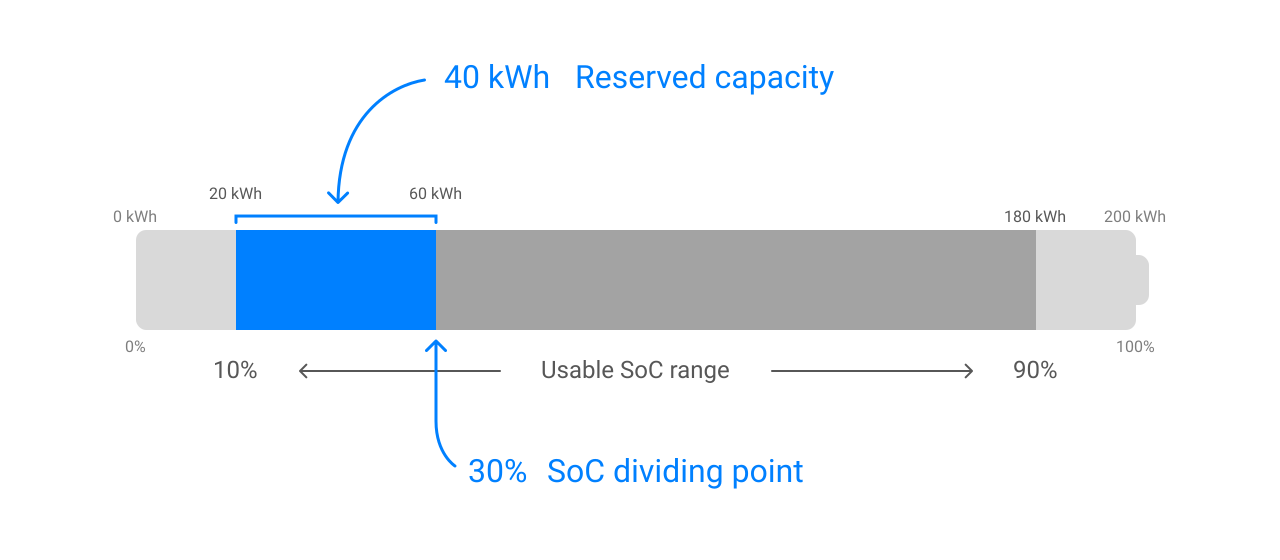
In the example above, it has been determined that the total capacity to be reserved is 40 kWh. Each storage system has a specific SoC range with a lower and upper limit. In the example, the battery system has a capacity of 200 kWh. Due to the lower limit of 10%, the SoC dividing point will be set at 30%, keeping a total of 40 kWh in reserve for the peak-shaving functionality.
What is the difference with a Grid Guard?
The difference between the Peak-shaving control strategy and the Grid Guard is that this functionality actively controls the battery to prevent an exceedance of the consumption power. The Grid Guard will not on its own absorb consumption that would otherwise lead to an exceedance, but is applied in combination with other control strategies to keep charging and discharging within the limits of the grid connection.