Third-party Storage Control
How it works
Making storage installations controllable for third parties in order to increase the system's yield based on external information.
The third-party storage control strategy is applied when a storage installation is present behind a connection and the (end) customer wishes to control this installation based on external information. This strategy is often used when a customer has entered into an imbalance energy contract and therefore wants their storage system to be controlled by, for example, a BSP or CSP. The third-party storage control strategy, in combination with the Envi.Baseenvi.baseDe energiecontroller van Envitron die apparaten uitleest, aanstuurt en data opslaat achter de hoofdaansluiting. energy controller, facilitates control by the energy supplier. This does not mean that control is limited to energy suppliers; it is also possible to have another party handle this, provided that an API connection has been established.
BSP stands for Balance Service Provider and CSP stands for Congestion Service Provider. These are parties that are certified and approved for providing imbalance services or capacity management, such as for a capacity-limiting contract (CBC).
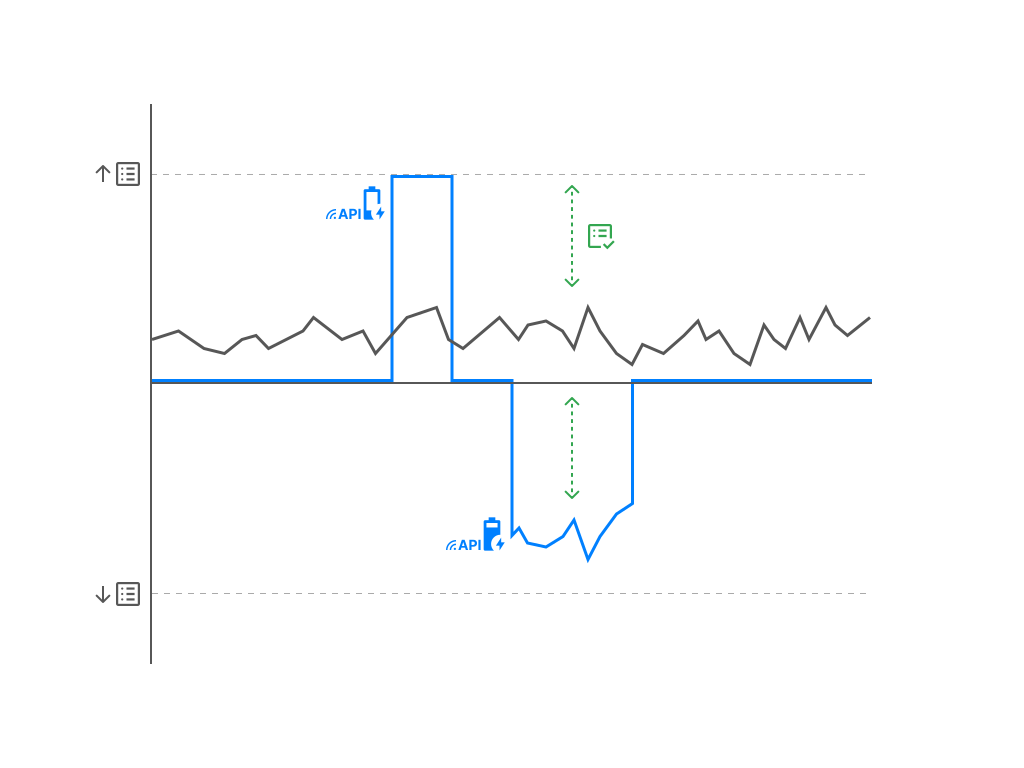
This strategy connects the trading algorithm of the energy supplier (also known as the 'trader') with the storage system or battery on site. The Envi.Baseenvi.baseDe energiecontroller van Envitron die apparaten uitleest, aanstuurt en data opslaat achter de hoofdaansluiting. energy controller is physically connected to the battery, and via an API connection the trader can then control the installation as desired. The strategy monitors the correct processing of the control signals.
Combining with other Control Strategies
Local monitoring of the grid connection
The Third-party Storage Control strategy is often combined with the Grid Guard. This strategy ensures that, in parallel with the control signals from the connected trader, the Envi.Baseenvi.baseDe energiecontroller van Envitron die apparaten uitleest, aanstuurt en data opslaat achter de hoofdaansluiting. locally monitors the limits of the grid connection and ensures that they are not exceeded. This guarantees that the battery system can always be charged or discharged safely and to its maximum capacity.
Self-Consumption Optimisation
It is possible to combine third-party control with Self-Consumption Optimization. However, always verify this with your control service provider in advance. Since Self-Consumption Optimization is a local control strategy, it is important to understand how both control strategies interact.
The control service provider can send charge/discharge setpoints to the battery through the API. Self-Consumption Optimization is automatically activated whenever there is no active setpoint. In practice, this works as follows:
-
The control service provider sends a
chargesetpoint with atimeoutof 900 seconds. → The battery will charge for the next 15 minutes at the specified power level, within the available operating limits. -
After 15 minutes, the setpoint expires and is not replaced by a new one. → The EMSemsEnergymanagementsysteem dat energieverbruik en opwek bewaakt en optimaliseert binnen een installatie. automatically switches to Self-Consumption Optimization.
→ When power is exported to the grid, the surplus energy will be stored in the battery.
→ When power is imported from the grid, the battery will discharge to supply the local consumption.
→ This effectively controls the installation towards "zero import/export at the grid connection".
-
If the battery should remain completely inactive—including disabling Self-Consumption Optimization—a
0 kWsetpoint can be sent with the desiredtimeout. This setpoint takes priority and will be maintained for the specified duration.
Peak Shaving
The Peak Shaving functionality is often combined with other control strategies to maximize the value of the available battery capacity. The same applies when combining it with third-party control. There are two important considerations:
- The battery will also discharge locally whenever the Peak Shaving strategy detects that the grid connection limit is about to be exceeded. This control strategy has priority over third-party control and will continue to operate even if the external 4G connection is lost.
- A dedicated portion of the battery capacity can be reserved specifically for Peak Shaving using the
SoC dividing point.
Determining the correct SoC dividing point
The reserved capacity when combining multiple storage control strategies is also referred to as the SoC dividing point. The required capacity that needs to be reserved depends on the size and duration of the highest peak in energy consumption. This can be determined using historical data, optionally in combination with a forecast of the expected energy consumption.
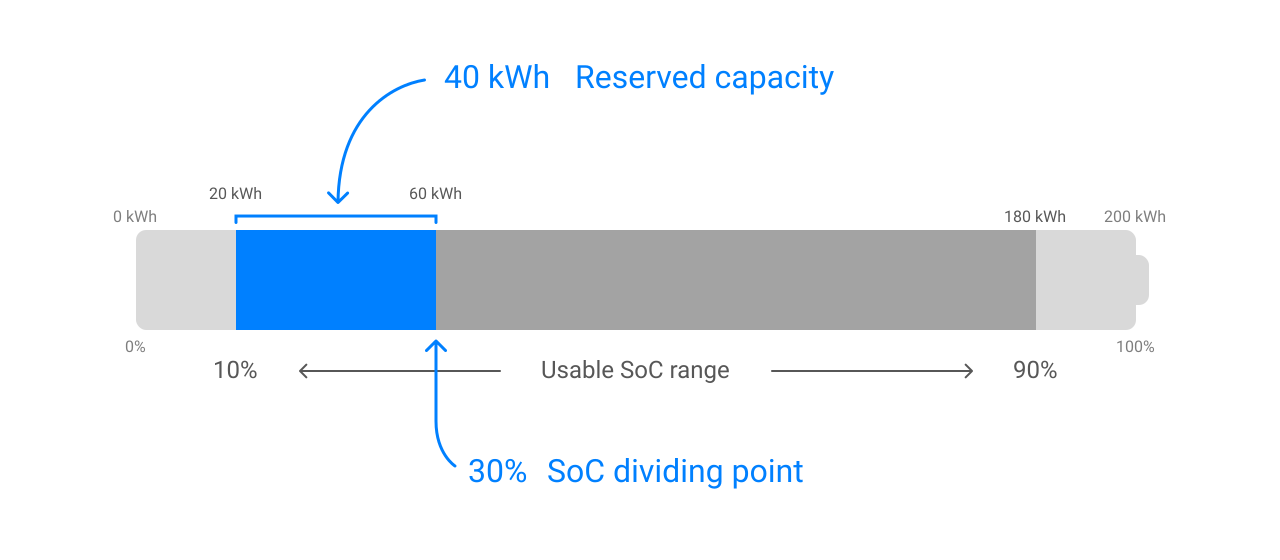
In the example above, it has been determined that the total capacity to be reserved is 40 kWh. Each storage system has a specific SoC range with a lower and upper limit. In the example, the battery system has a capacity of 200 kWh. Due to the lower limit of 10%, the SoC dividing point will be set at 30%, keeping a total of 40 kWh in reserve for the peak-shaving functionality.
Additional information
The Third-party Storage Control strategy makes it possible to control battery systems based on external market signals. The text below explains in more detail how this strategy operates in combination with other systems and which technical and operational considerations apply.
Different controlling parties
The chosen controlling party (for example a BSP or CSP) can vary greatly when it comes to external control. Each party uses its own (trading) algorithm. The Envi.Baseenvi.baseDe energiecontroller van Envitron die apparaten uitleest, aanstuurt en data opslaat achter de hoofdaansluiting. supports switching between parties without additional configuration costs. This keeps the installation flexibly deployable with different energy suppliers or market parties. Some of the parties that already have a connection include:
- Repowered
- Edmij
- Eneco
- Groendus
- Greenchoice
- FridayEnergy
- EddyGrid
- PureEnergie
- Tibo Energy
Connection and validation
For the connection with the trader, the Envi.Baseenvi.baseDe energiecontroller van Envitron die apparaten uitleest, aanstuurt en data opslaat achter de hoofdaansluiting. uses a secured API connection. This connection is tested in advance according to established process agreements between Envitron and the connected trading platforms. After successful validation, the strategy is released for operational use via the service partner or the end customer.
Combination with a power control strategy
When the battery system is controlled by an external party, the power demand on the connection can vary greatly. A Grid Guard prevents the maximum connection capacity from being exceeded during these control operations. Combining the Third-party Storage Control strategy with the Grid Guard is therefore recommended in situations where an installation is subject to a limitation on the grid connection that needs to be safeguarded locally.
Integration with an existing power control strategy
If a power-limiting strategy is already active on the generation installation, this will be taken over by the Envi.Baseenvi.baseDe energiecontroller van Envitron die apparaten uitleest, aanstuurt en data opslaat achter de hoofdaansluiting. — in many cases without the need to install additional hardware. This prevents conflicts between external signals and local power limits. When multiple strategies operate independently of each other, this can lead to instability ("hunting") or error messages in the installation. It is therefore necessary for the existing power control strategy to be integrated into the Envi.Baseenvi.baseDe energiecontroller van Envitron die apparaten uitleest, aanstuurt en data opslaat achter de hoofdaansluiting. and removed from the original installation configuration. This is fully handled during installation.