Load-balancing
In short
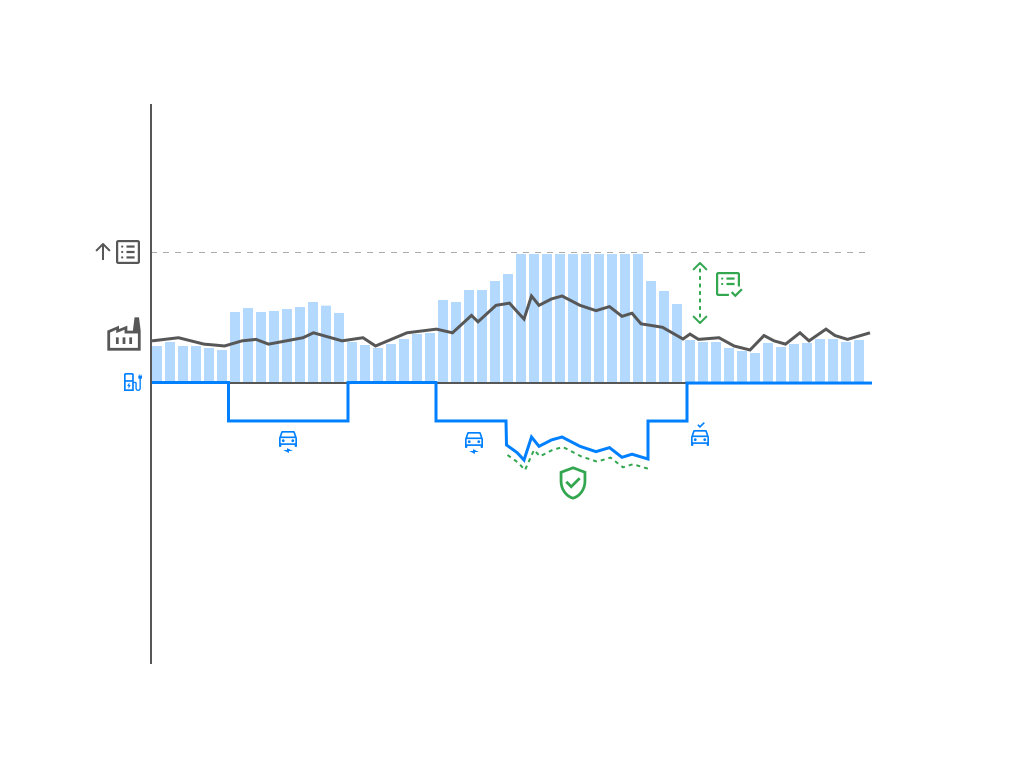
The load-balancing of a consumer is done by reading a meter on the main connection. Through this meter, the energy across the grid connection is measured multiple times per second, and the controlled consumers are regulated to ensure that the maximum power is not exceeded.
How it works
Through the connection with a meter on the main connection, or a specific group that needs to be monitored, the Envi.Baseenvi.baseDe energiecontroller van Envitron die apparaten uitleest, aanstuurt en data opslaat achter de hoofdaansluiting. reads the current power or current and reduces the connected consumers if necessary. The available power is distributed across the consumers, optionally taking into account a minimum lower limit for each consumer. When combining multiple assets and load balancers, it is possible to configure different groups, each of which will be limited to a specific power level. This allows a certain priority to be established within the system.
Additional information
The load-balancing control makes it possible to actively limit consumers at moments that would otherwise result in an exceedance of the capacity or contracted power. Below, further explanation can be found on how specific situations can be configured and what technical preconditions apply.
Support of consumers
The most important precondition for realising the load-balancing functionality is the degree of controllability of the consumer itself. Not all devices support an external connection via the supported protocols such as Modbus (TCP/RTU) or MQTT. In addition, within the supported options, the correct functionalities must also be available for control based on energy and/or power. This means, for example, that EV chargers are the most common consumers that fall under this control strategy.